
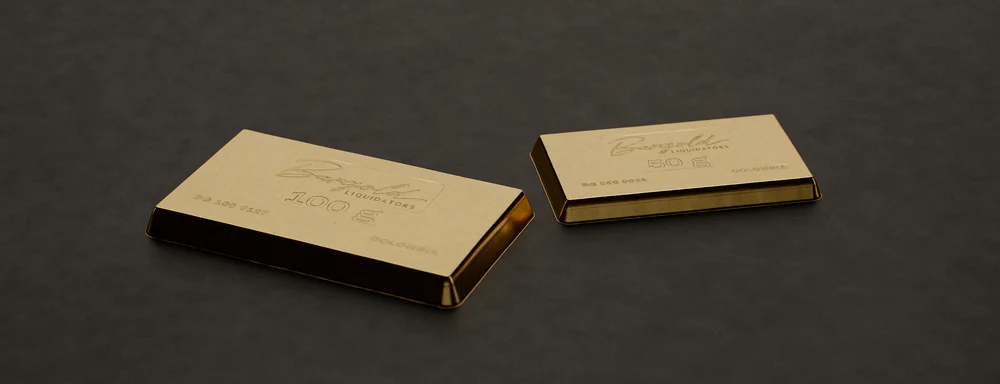
Unrefined gold bars, 50 g and 100 g gross weight
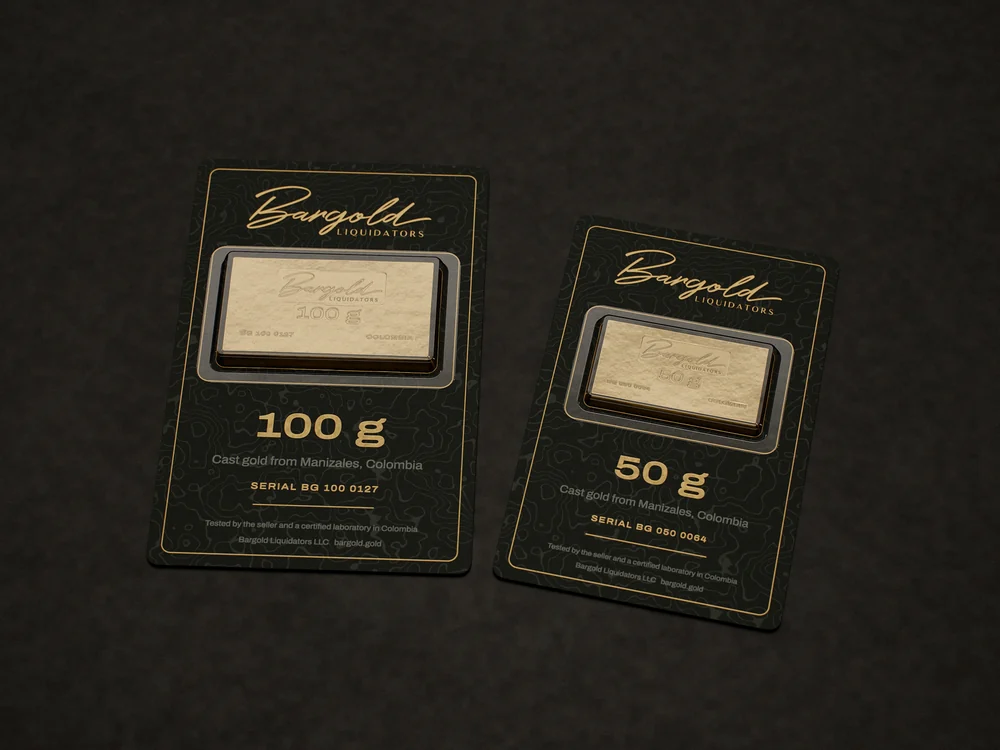
Stamped bars of unrefined gold, 50 g and 100 g gross weight. Each one is serial-numbered, sealed in its card and sold with its papers.
What you're buying
Bargold bars are stamped bars of unrefined gold. They come in two sizes, 50 g and 100 g. Both figures are the gross weight: the weight of the whole bar, including the silver and other metals it still contains.
Each bar is struck with the Bargold mark, its weight, a serial number and "Colombia", then sealed in a card printed with the same weight and serial number.
- Sizes
- 50 g and 100 g gross weight.
- What it is
- Unrefined gold (doré): mostly gold, with silver and small amounts of other metals.
- On the bar
- The Bargold mark, the weight, a serial number and "Colombia".
- In its card
- A sealed card with a window, printed with the bar's weight and serial number.
- Tested
- By a laboratory in Colombia. The fineness is on the assay report that comes with it.
- Papers
- Certificate of origin, assay report, mining title and RUCOM registration, invoice. See the papers.
These images are renderings of the bar and card designs, not photographs. Real bars vary in colour and surface.
Why a 100 g bar doesn't hold 100 g of gold
The stamped weight is the whole bar. Because the gold hasn't been refined, part of that weight is silver and other metals.
The assay report gives the bar's fineness. Fine gold = weight × fineness ÷ 1000, so a 100 g bar at 900‰ holds 90 g of gold. Try your own figures in the gold calculator.
| Bar (gross) | Fineness | Fine gold |
|---|---|---|
| 50 g | 900‰ | 45.0 g |
| 100 g | 900‰ | 90.0 g |
| 50 g | 950‰ | 47.5 g |
| 100 g | 950‰ | 95.0 g |
Example figures only. A real bar's fineness is on its assay report.
The papers that come with every lot
Four documents come with every lot. They show where the gold was mined, who sold it and what it contains, and they're what a refinery asks for before it buys.
- Certificate of origin
- Issued by the mining company, naming the mine the gold came from.
- Assay report
- The weight and fineness, measured by a laboratory in Colombia. The laboratory is named on the report.
- Mining title and RUCOM registration
- The mining title for the mine and the mining company's registration in Colombia's register of mineral traders (RUCOM), both of which you can check.
- Invoice and export documents
- The record of sale and, for gold leaving Colombia, the customs paperwork for the shipment.
Questions about the bars
What is doré?
Gold as it comes out of the mine: melted and cast into a bar, but not yet refined. Besides gold it contains silver and small amounts of other metals. A refinery separates them to produce fine gold. Read more about doré.
Why doesn't a 100 g bar hold 100 g of gold?
The stamped weight is the whole bar. Because the bar is unrefined, part of that weight is silver and other metals. The assay report gives the fineness; weight × fineness ÷ 1000 is the gold. The calculator does the sum.
What fineness are the bars?
It varies from bar to bar, because it's unrefined gold. Each bar's fineness is on the assay report that comes with it, and you see it in your written quote before you pay.
Are the pictures photos of real bars?
No. The images on this site are renderings of the bar and card designs. Real bars vary in colour and surface.
Ready to buy?
Apply first. We review every application before a sale.